Your cart is empty


In this November issue we hold our AGM, engage with Vietnamese and First Nations communities, conduct high intensity testing at a correctional centre and much more.
- Hepatitis NSW Annual General Meeting
- Cheryl Burman Award Winner
- Riverwood community event
- Hepatitis NSW connects with Vietnamese community
- Peer workers attend Junee CC High Intensity Testing
- Hepatitis NSW and the Redfern First Nations community
- Priority Populations Team at Australian Hepatology Association Symposium
- National Prisons Hepatitis Network (NPHN) seventh annual workshop 2025
- Hepatitis C and liver cancer
- RACGP: Managing hepatitis C in general practice settings webinar
Hepatitis NSW Annual General Meeting
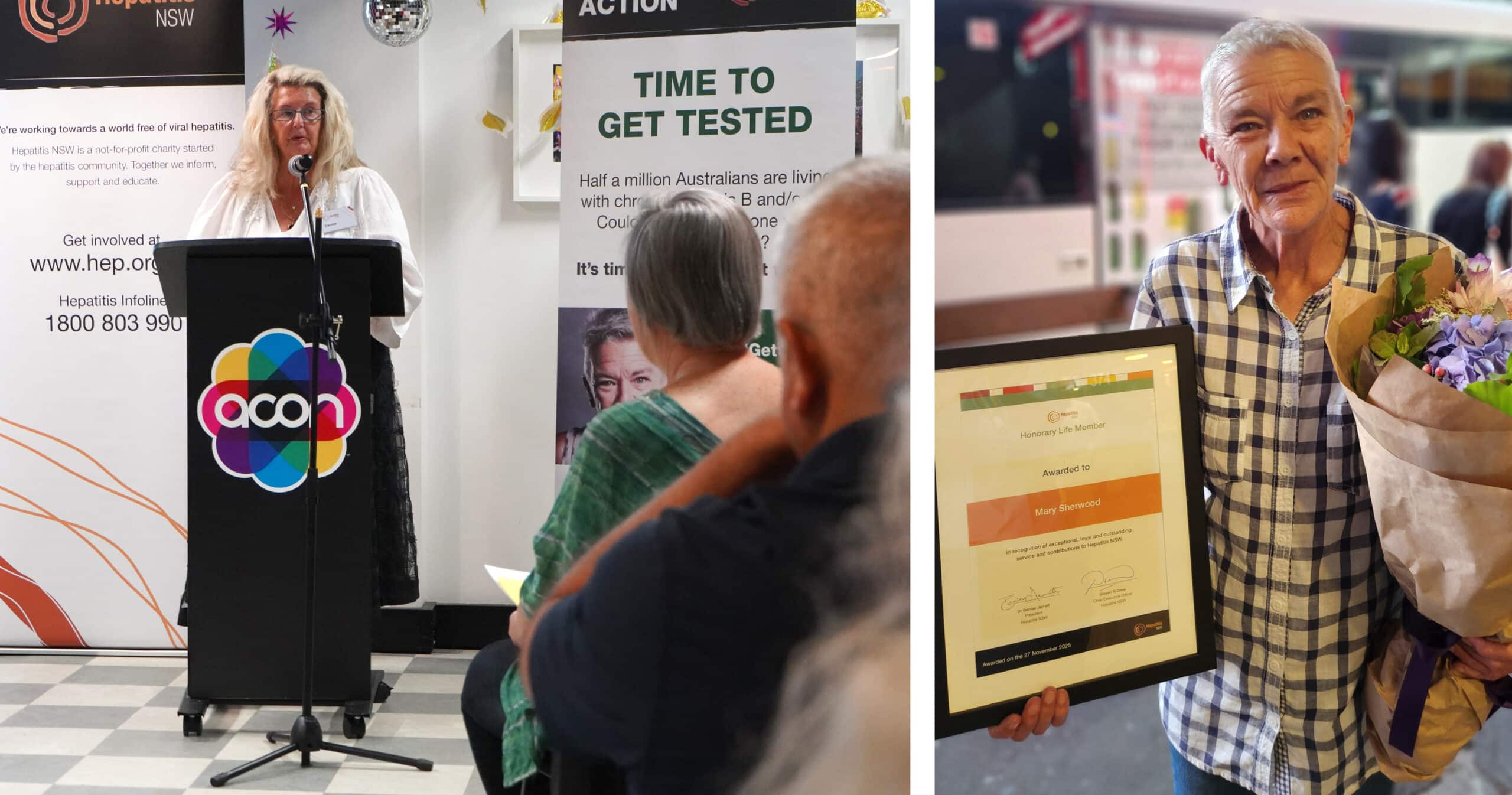
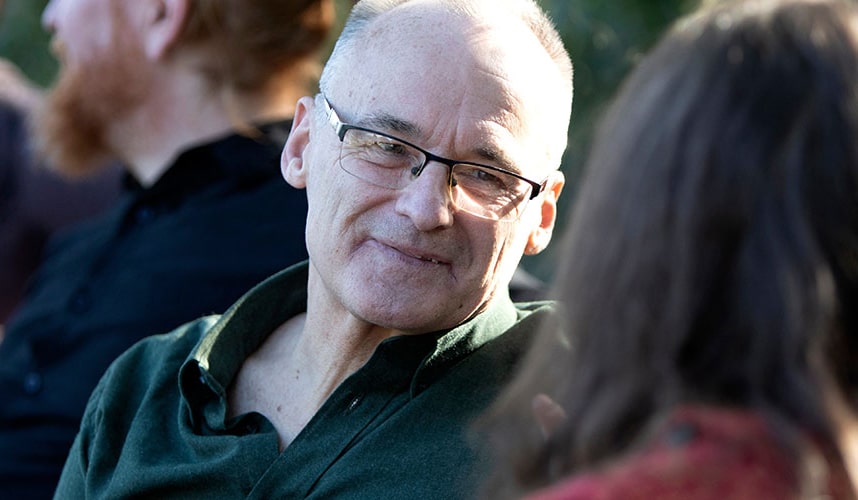
Hepatitis NSW’s Annual General Meeting took place on 27 November 2025. The meeting received the President’s report and annual report on our activities, and the Treasurer’s report and Financial Statements for July 2024 to June 2025. The Board members were elected for the next two years. Stand out moments were the presentation of Honorary Life Membership to three worthy recipients: Mary Sherwood (right), Dr Joe Lawler and Jae Kang. The Cheryl Burman Award 2025 was also presented.
Our 2025 Services and Annual Report video and report can be found here on the website.
The video report is available on our You Tube channel here.

Cheryl Burman Award Winner
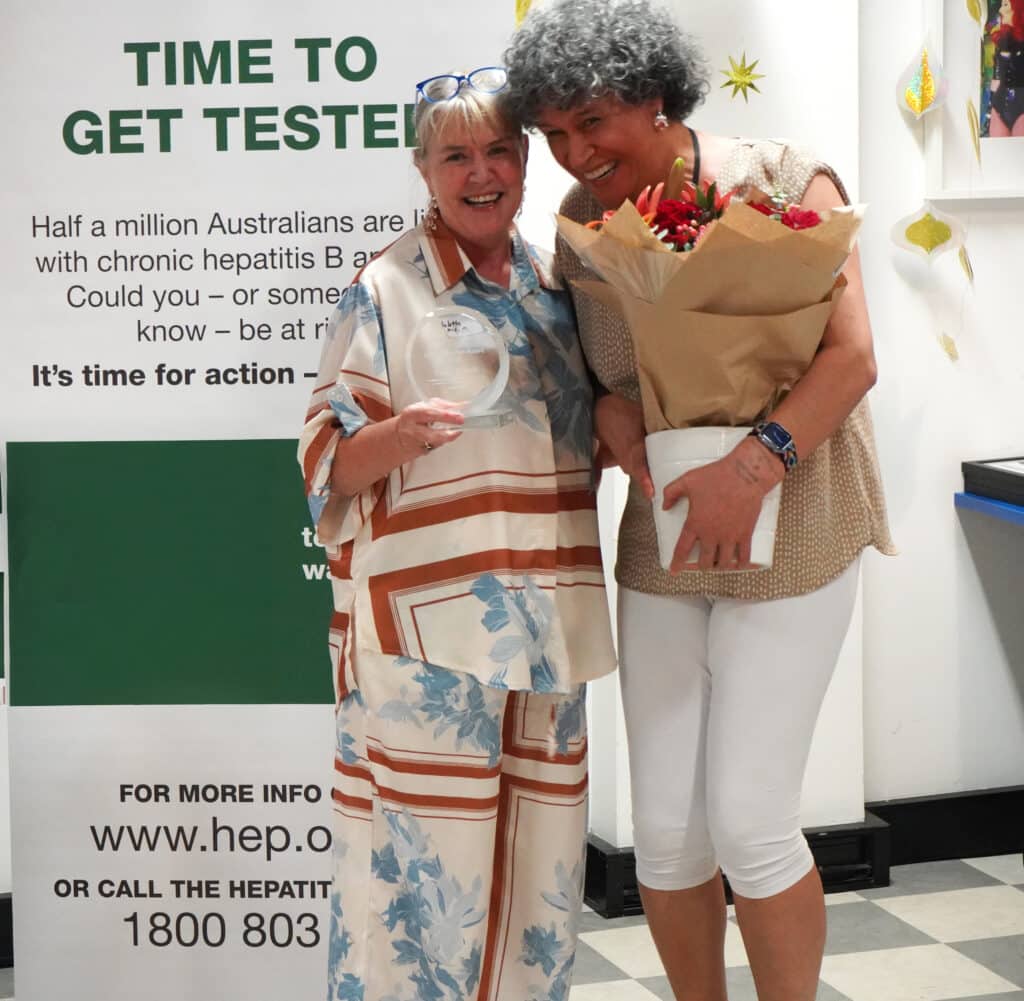
Hepatitis NSW’s Cheryl Burman Award is an annual award, given to a person or group who have done outstanding work in NSW in the fight against viral hepatitis. This could be in the advancement of treatment, support, information provision, prevention, or management for people living with viral hepatitis.
This year’s award went to Colette McGrath (left). Colette is an incredible health professional who has delivered clinical excellence throughout her career via numerous and various initiatives and services in NSW Local Health Districts and Justice Health NSW. Colette was awarded for her lifetime work delivering health services to marginalised people and her leadership role in eliminating hepatitis C within NSW prisons.
Colette has worked in the nursing, drug and alcohol, harm minimisation, BBV/HIV & STI sector most of her working life, commencing in the 1980s in a community drug team in North London. Of those times Colette said “It was early days in the HIV epidemic, news was scanty, myths and fear were everywhere, and stigma and discrimination was rife”. She says “I was horrified how some staff treated people who were gay, haemophiliac and those who injected drugs. Hepatitis C, or as we knew it then Non-A/Non-B, was around but we were oblivious to how it was transmitted then.”
After migrating to Australia in 1994, Colette worked at Kirketon Road Centre (KRC), then as the Clinical Services Manager of the brave new Medically Supervised Injecting Centre (MSIC) followed by the HARP Unit in SESLHD. Colette worked with people across Health and NGOs such as Hepatitis NSW, ACON, NUAA, Positive Life NSW and BGF to name a few throughout her career. Most recently, Colette was the General Manager Population and Preventative Health, Justice Health NSW until her retirement in August this year.
Colette is a highly respected health professional and has been described by others in the field as “the giant on whose shoulders we stand.” Colette led innovation within the services she worked for in developing clinical and outreach models and building community development and peer workers into service design. Colette was a pioneer in integrating peer workers and community development into clinical models, ensuring marginalised populations received care in environments they could trust. Her leadership helped transform outreach and clinical services into inclusive, community-driven models. These services, such as KRC under Ingrid van Beek’s leadership, were focused on delivering to marginalised people in locations they could access, without stigma.
From 2016 Collette recognised that prisons would be a key focus for hepatitis C elimination efforts and moved to work in Justice Health. Colette took a leadership role in eliminating hepatitis C within NSW correctional facilities. In her work with Justice Health, within the prison system, she ensured follow up of patients as they moved around in the custodial setting to ensure testing and treatment follow up. She led the implementation of the micro elimination model of testing and treating people in custody, to create wings or pods, or entire correctional centres that were, in effect, hep C free, creating communities of people who had been cured.
Her work in the response to COVID in prisons was innovative, delivered with urgency and is credited with preventing infections amongst the population and the staff. Colette is credited with giving the elimination of hep C in prisons “a red hot go” and built and rebuilt the team to orientate to new testing, treatment options and models of care. Both KRC and Justice Health staff state that they ‘couldn’t achieve what they’ve achieved without her counsel and support. By any measure, Colette is a very worthy recipient of this prestigious award.
Riverwood community event

On Wednesday 19 November 2025, a large collaboration between teams from Sydney and South-Eastern Sydney LHD combined with clinicians, staff and peer representatives from Kirketon Road Centre, Mental Health Advocacy Service, NUAA, Hepatitis NSW and other cultural support services provided a high-capacity community event in Riverwood. The focus of the event was testing for viral hepatitis, via INSTI and Bioline testing modalities, with additional focus on harm reduction, STI referrals, and multicultural workers giving in-language support for many of the event participants.
Even with the blazing sun, over 100 people were welcomed across the day, some of whom were tested, others who simply came for a chat, to pick up some harm reduction kits or grab a free sausage sandwich.
The event was a huge success in attracting people from a diverse range of communities. The interaction between the partnered LHD and NGO health teams ensured a high amount of testing, education and liver health information was available in multiple languages providing valuable liver care, aligned health service provision and referrals for the attendees. The Riverwood event demonstrated the power of collaborative partnerships in creating a large turnout, high quality community outreach with a multifaceted capacity for community care. Sophie, from Sydney LHD and Julie from SESLHD headed up the day’s efforts, delivering a sensational event that was welcomed by everyone who participated
Hepatitis NSW connects with Vietnamese community
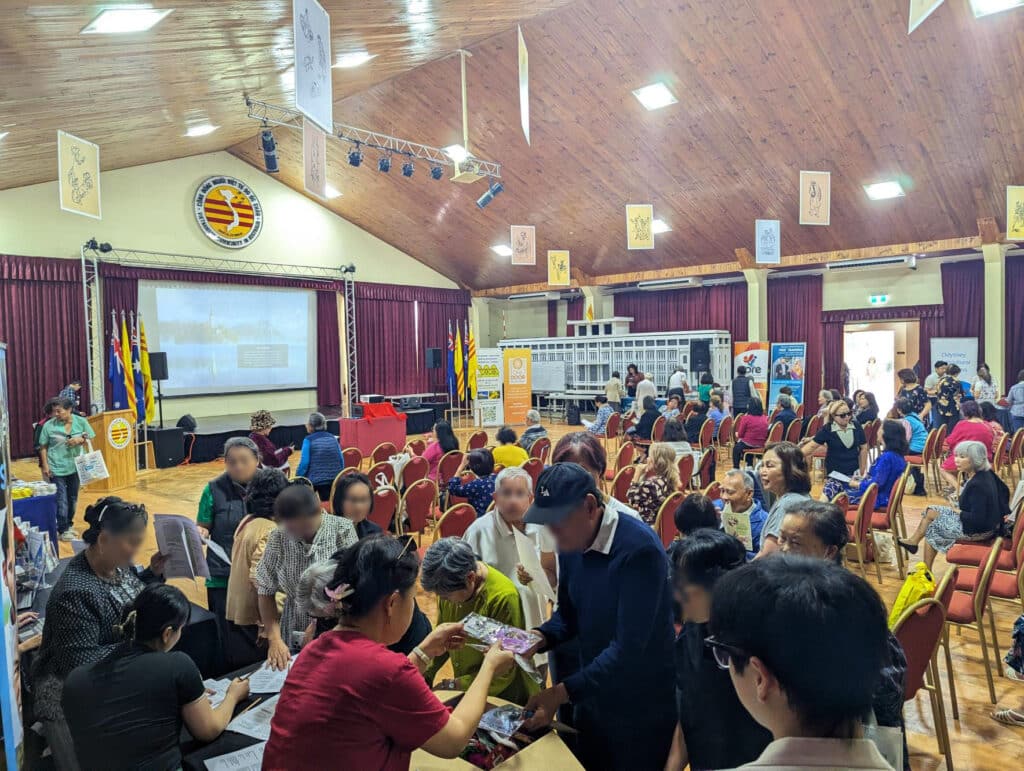
Early in November Hepatitis NSW participated in an expo hosted by The Vietnamese Community in Australia-NSW Chapter Inc., partnering with South Western Sydney LHD, community service providers, and Sydney University. The expo was held at the Vietnamese Community and Cultural Centre, Bonnyrigg, and it focused on health and wellbeing.
We set up an information stall and spoke with over 100 people about hepatitis B, sharing vital information and raising awareness. It was also the first outreach event for our newest member of staff Ha, Project Officer with the Heplink Program, who is fluent in Vietnamese.
We distributed our hepatitis B quiz and information booklets attracting significant interest from the community. Our staff were busy answering questions and encouraging attendees to learn more about prevention, testing, and treatment for hepatitis B. This engagement was a valuable opportunity for Hepatitis NSW to reach the Vietnamese-speaking community and reinforce our commitment to eliminating viral hepatitis B.
On Wednesday 19 November, we delivered our first Hepatitis B education session for the Vietnamese Senior Group from CASS, a community we will be partnering with for our LiverCare testing event in December. This session was held in the Yagoona Community Centre, and its goal was to ensure participants were well informed about hepatitis B.
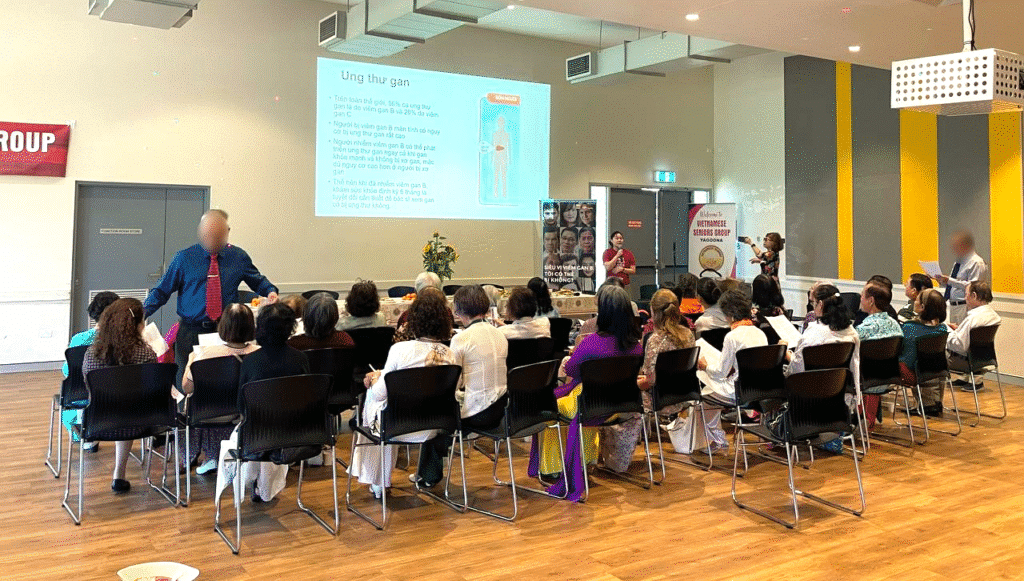
Despite the limited time frame, Ha’s debut as a presenter was highly effective. She organised the presentation efficiently and engaged attendees with a hepatitis B quiz. Participants showed great enthusiasm and actively participated, asking many questions about common hepatitis B misconceptions. Everyone received information resources, including our recently printed Vietnamese “Hep B Story” booklet, and a gift for their involvement. Hepatitis NSW is committed to expanding our educational outreach and increasing our connections within priority communities. We encourage groups to email us at info@hep.org.au, if you are interested in hosting a seminar on hepatitis B and liver health.
Peer workers attend Junee CC High Intensity Testing
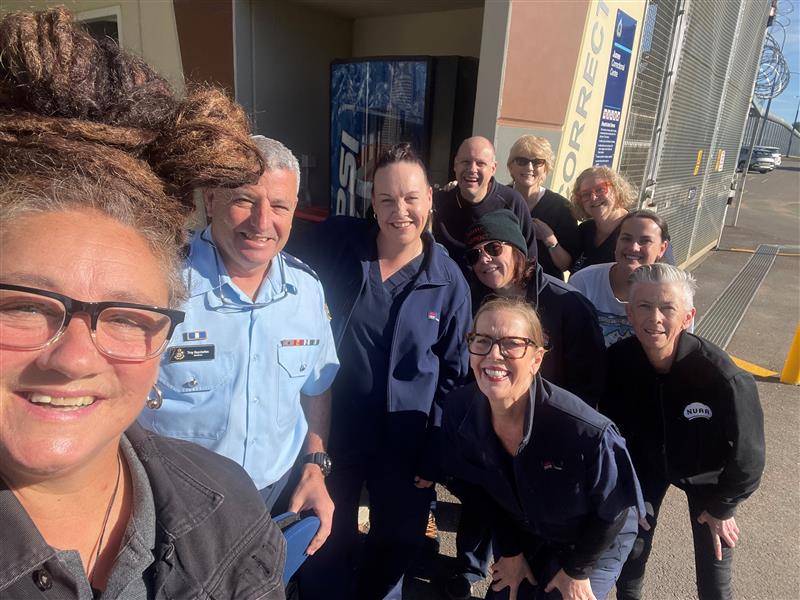
Hepatitis NSW’s JD, Peer Program Project Officer – Community Support, joined NUAA and Murrumbidgee LHD staff for a 4-day High Intensity Testing and Treatment campaign at Junee Correctional Centre (CC). This was the first time that we have been in Junee CC since it was de-privatised in April 2025. It’s a privilege to be invited into these spaces and to make a difference.
Over 400 tests were completed, which was 70% of the prison population.
During these outreach events, Hepatitis NSW connects prisoners with our Hepatitis InfoLine and promotes our free Hepatitis Info Pack, themed playing cards and Tx! Mag comic book all of which contain clear and concise information about hep C. Calls to the Hepatitis InfoLine always spike after events such as this and Junee was no exception.
Hepatitis NSW and the Redfern First Nations community
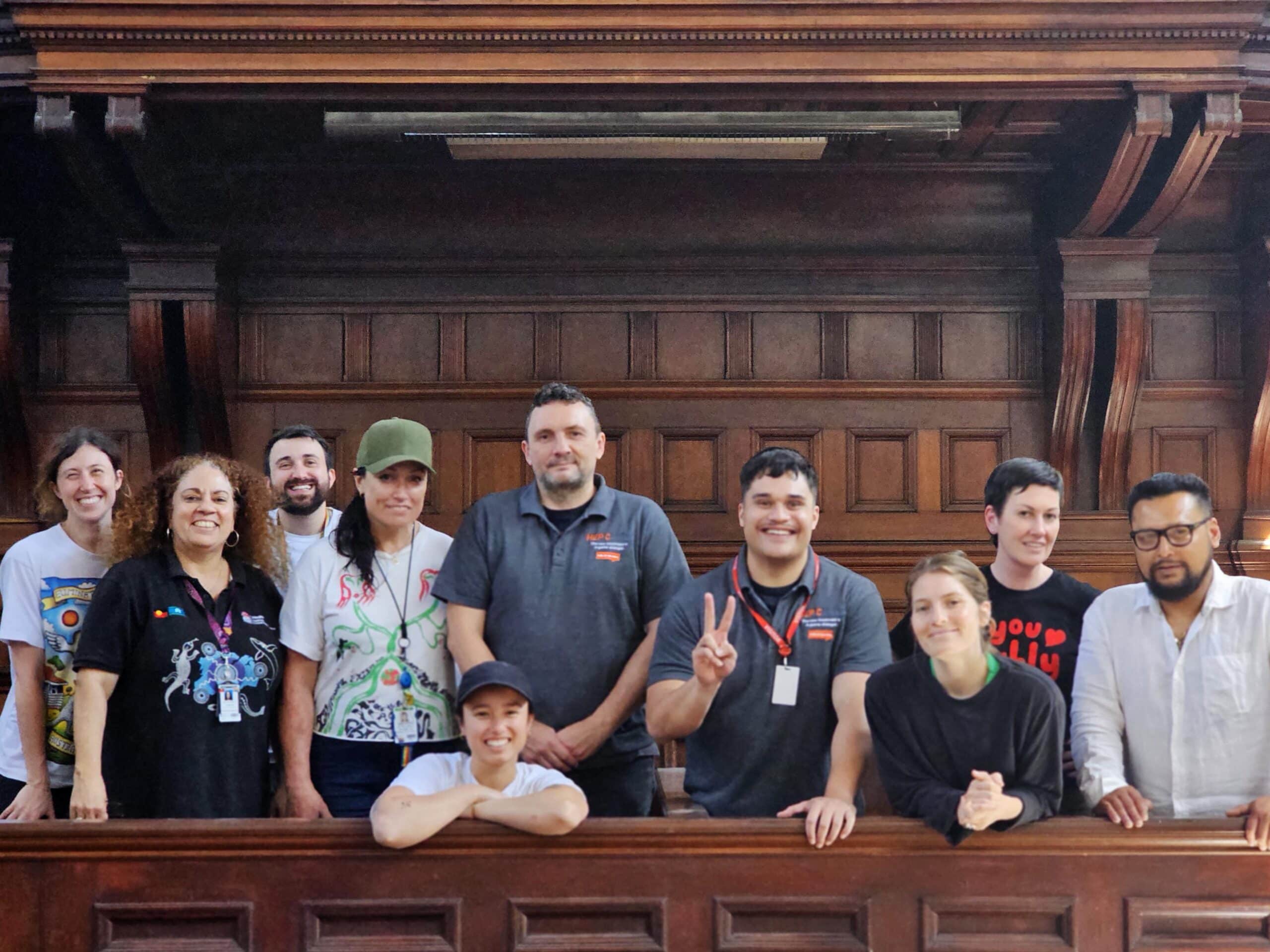
Hepatitis NSW had a fantastic day collaborating with Sydney LHD, Redfern AMS, and the Redfern Harm Reduction Program to deliver vital healthcare services to the local community. Led by the amazing engagement team of Earl, our First Nations Peer, and the wonderful Bindi, the team engaged over 50 community members in a culturally safe and welcoming space. A total of 42 people received hepatitis C testing at the event. Importantly, more than 90% of participants identified as First Nations, showing strong community engagement.
Priority Populations Team at Australian Hepatology Association Symposium
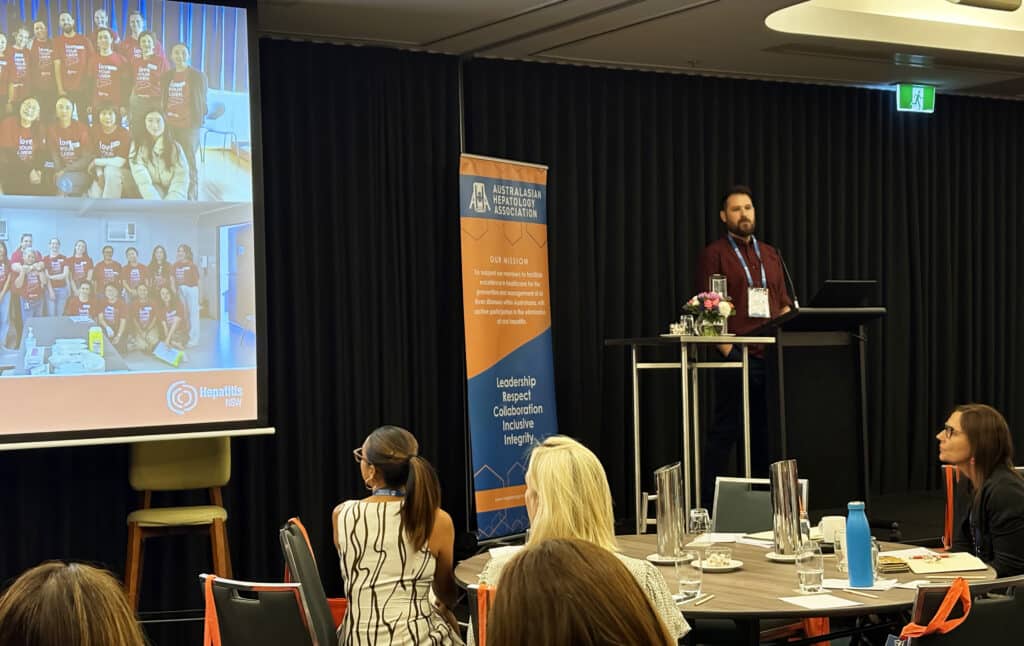
Our Priority Populations and Settings Program Manager, Kyle, was invited to present at the 2025 Australasian Hepatology Association Conference in Darling Harbour. Kyle presented on our successes with our outreach hepatitis B point-of-care program across Sydney as well as Hepatitis NSW’s approach to engaging with multicultural communities. We’ve hit lots of milestones in our hep B work in 2025 and it was great to be able to talk about what we do, why we do it, and how well it all works!
National Prisons Hepatitis Network (NPHN) seventh annual workshop 2025
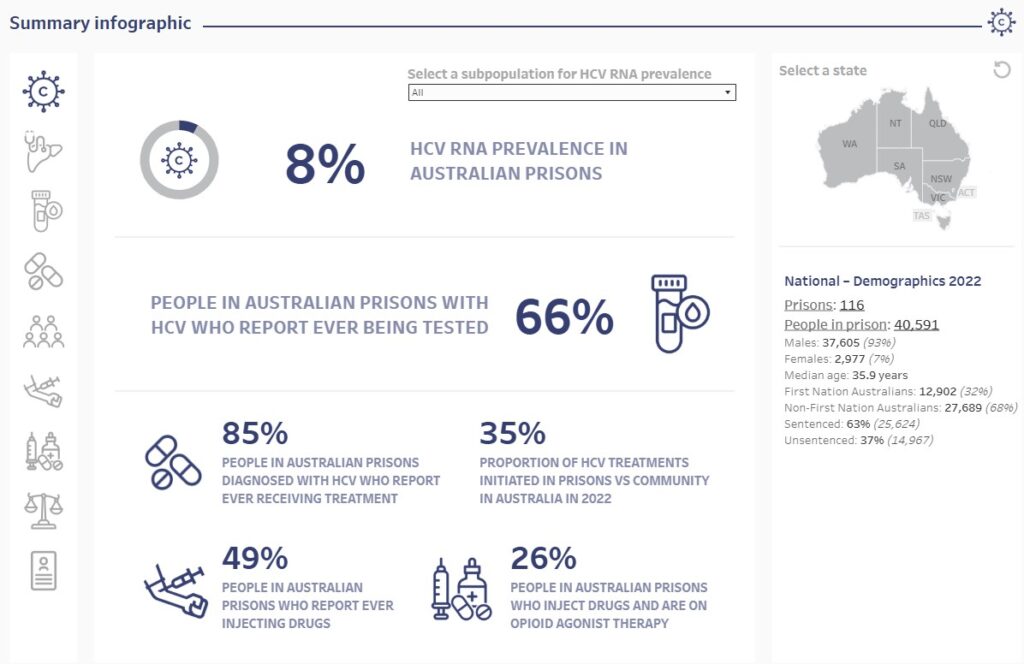
On Thursday 20 November 2025, the National Prisons Hepatitis Network (NPHN), held their seventh annual workshop in Naarm (Melbourne), with a theme of “Prisons as a frontier for hepatitis C elimination: reinfection, harm reduction and equity.”
This year, over 60 people across the research, health and correctional sector converged to discuss past, present and future hepatitis work occurring in custodial settings. Representing Hepatitis NSW was CEO Steven and Peer Partnership Coordinator Liam, in part to discuss the ongoing collaborations and partnerships in high intensity testing campaigns (HITC) and Community Corrections events regularly attended by peer workers and staff across NSW.
The workshop was broken into 3 sessions: 1) HCV in Australian prisons, 2) HCV reinfection and retreatment, 3) Harm reduction and prevention.
The special guest presentation was delivered by the CEOs of Hepatitis Australia, Lucy Clynes, and AIVL (Australian Injecting & Illicit Drug Users League), John Gobeil. With the Sixth National Hep C strategy about to be formally released, the two spoke about the achievements which have been made leading up to this strategic release and what lies ahead to meet elimination goals.
Next, representatives from each state or territory custodial health-based service gave a jurisdictional ‘show and tell’ about efforts to test, identify and treat hepatitis C in their local areas. This illuminated the various achievements and work being done in each locality. While hepatitis C numbers appear to be stabilising across each jurisdiction, most showed increased incarceration numbers. These increases show the disproportional overrepresentation of Aboriginal and Torres Strait Islander people in custody, with a flow on result of Indigenous cohorts in custody being overly affected by viral hepatitis, comparative to non-Indigenous groups, something which remains true in community as well. The starkest facts around the prisoner increase came from the Northern Territory, which has the second highest incarceration rate in the world at 1,238 per 100,000 people, second only to El Salvador at 1,659 per 100,000 people, with the Northern Territory’s prison population being overwhelmingly Aboriginal.
A ‘Geoffrey Robertson’ hypothetical was the key part of session two, featuring a broad representation of people involved at every level of hep C work in the prisons space. The hypothetical dealt with the challenges of HCV transmissions, re-infection, and public health issues relative to custodial settings.
The final session had an addiction medicine specialist discuss the unique issues faced in managing opioid agonist therapy uptake and substance withdrawal for people in custody.
The workshop finished with another expert panel to discuss NSP’s in prison settings and the priority settings for NPHN in 2025. There was special mention to NPHN’s continued achievements to de-silo hepatitis healthcare and work towards hepatitis C elimination in prisons across Australia.
For further information and key data on hepatitis in prisons, visit the NPHN Dashboard.
Hepatitis C and liver cancer
Hepatitis C (hep C) is only passed on through blood-to-blood contact. Hep C is an easily-cured liver infection, caused by the hepatitis C virus. However, if left untreated, hep C can lead to liver disease, cirrhosis and liver cancer.
Does hepatitis C cause liver cancer?
The hepatitis C virus is slow acting, so symptoms might not appear for years. If you have hep C for many years, this can cause long-term liver health problems. The hep C virus causes liver cells to become inflamed. When left untreated, the liver inflammation can cause scarring (cirrhosis) as liver cells die. The liver works hard to replace cells, and the new cells can mutate, becoming cancer cells. This can lead to those cells multiplying and growing into lumps or tumours of liver cancer.
This is why it’s very important to get tested for hep C and cured as soon as possible, to avoid ongoing inflammation that can lead to cirrhosis and liver cancer.
Hepatitis C liver cancer risk factors
Having hepatitis C is a major risk factor for developing liver cancer. Hep C is only passed on through blood-to-blood contact, when the blood of someone with hep C gets into someone else’s blood stream. The most common risk factors for hep C are:
- Sharing needles and syringes, or any drug injecting equipment.
- Backyard and prison tattooing and piercing.
If you have been at risk for hep C, get tested. If you have hep C, get cured to reduce your risk of liver cancer.
People who have cirrhosis should reduce or stop alcohol use to help lower the risk of liver cancer.
Hepatitis C liver cancer symptoms
People showing early signs of liver problems may experience symptoms based upon the stage of their condition. Symptoms may include:
- mild pain on the right side of the torso,
- feeling tired,
- brain “fog”,
- swollen abdomen,
- yellowing of the skin or eyes,
- weight loss or loss of appetite.
For more information, please read our Signs & symptoms of liver damage or disease page.
This information is not medical advice. If you have symptoms, talk to your doctor.
Prevention and screening
Having liver cirrhosis increases your risk of liver cancer. If you have cirrhosis, you need to have liver cancer screening appointments every 6 months at a liver clinic. It is very important not to miss any of your appointments because they can detect any cancer tumours, while they are still small.
Liver cancer screening includes blood tests and ultrasounds, which can detect cancer early. Liver cancer can be treated if it is caught early.
Resources and support on hepatitis C and liver cancer
Order our free Liver cirrhosis toolkit for patients, or call the Hepatitis Infoline to speak to someone who knows about cirrhosis of the liver and liver cancer.
You can also read our Liver cirrhosis toolkit booklet online for more information about managing liver cirrhosis.
Go to the Cancer Council website for more information about and support for liver cancer.
RACGP: Managing hepatitis C in general practice settings webinar
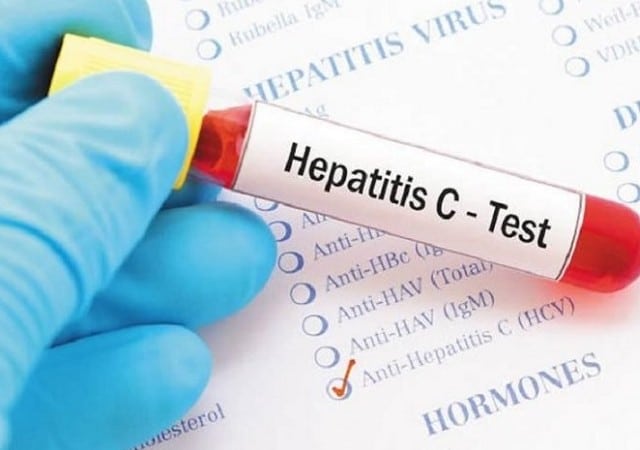
ASHM, NSW Health and RACGP HCV have collaborated to present a webinar about Managing hepatitis C in general practice settings. The webinar will be on 24 February 2026 from 7:30 PM – 8:30 PM (AEDT).
Hepatitis C treatment is simple and highly effective!
Primary care providers can play a crucial role in the elimination of hepatitis C in NSW by 2028. This webinar will provide an overview of the management of hepatitis C in primary care settings.
Topics covered include: the impact of hepatitis C-related stigma and discrimination, case finding, testing and diagnosis, assessment, treatment and monitoring.
To register for this free webinar follow this link.

The Champion is our free monthly eNews with updates on hep C, hep B, treatment news, social media campaigns, living well with viral hepatitis, and events. To subscribe and receive a monthly edition of the The Champion to your inbox, please complete this confidential form: